

Most brands eventually hit the same wall: traditional ads stop working the way they used to. People scroll past banner ads without a second glance, skip pre-roll videos the moment the “skip” button appears, and increasingly ignore anything that feels like a sales pitch. Trust in traditional advertising has been declining for years, and audiences have gotten very good at tuning out anything that looks like a brand talking at them instead of to them.
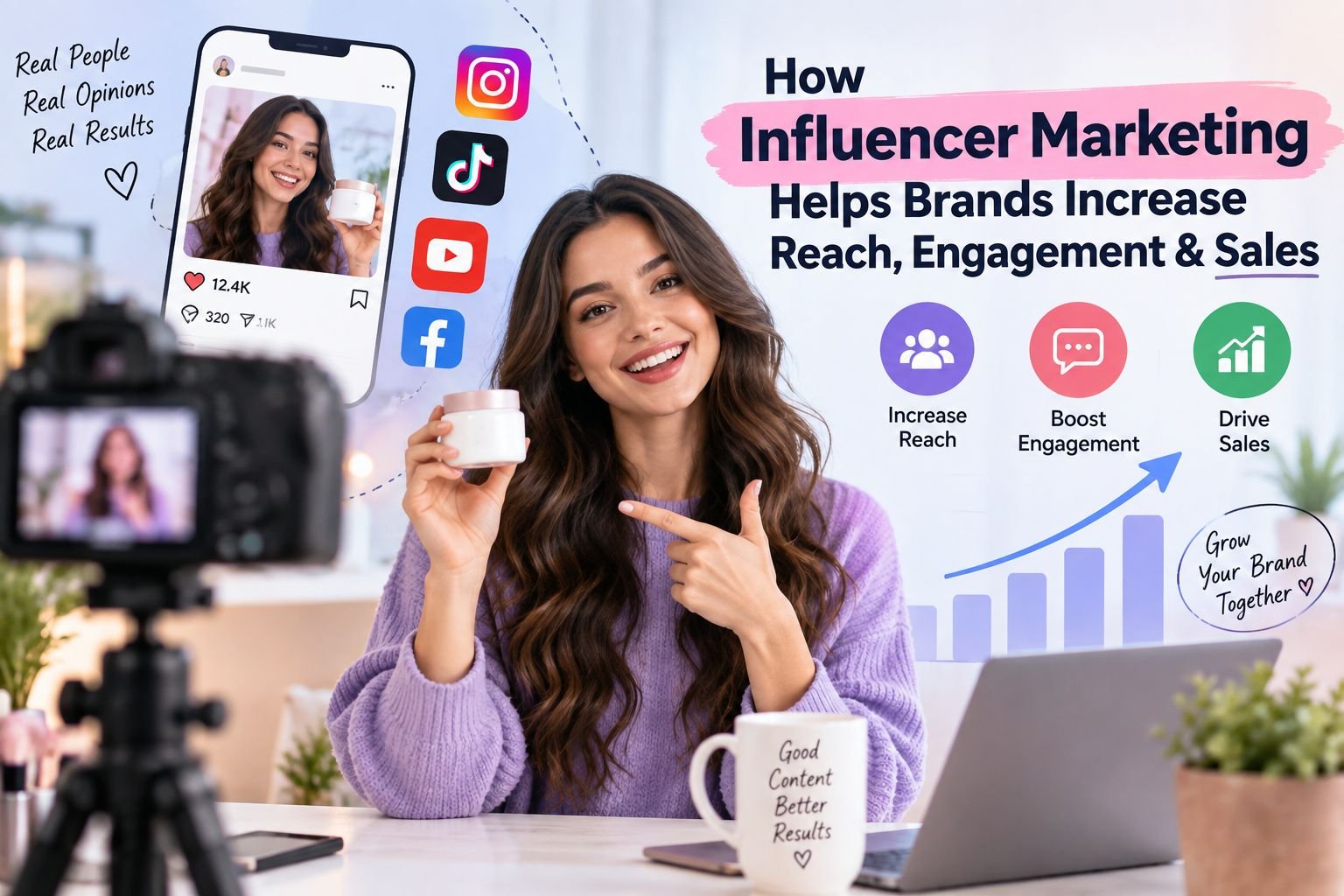
This is exactly the gap influencer marketing fills. Instead of a brand shouting its own message, someone the audience already knows and trusts does the talking. That single shift — from brand-led promotion to creator-led recommendation — is why influencer marketing has become one of the most reliable ways for businesses to expand their reach, build genuine engagement, and eventually turn followers into customers.
In this article, we’ll break down exactly how that works, what it looks like in practice, and how to build a strategy that actually delivers results instead of just vanity metrics.
What Is Influencer Marketing?
Influencer marketing is a form of collaboration where a brand partners with a content creator — someone with an established, engaged audience on platforms like Instagram, YouTube, TikTok, or even niche blogs — to promote a product or service to that audience.
The “influence” part isn’t about follower count. It’s about trust. A cooking creator with 40,000 followers who genuinely tests and reviews kitchen gadgets often drives more sales for a cookware brand than a celebrity with 4 million followers who posts a single sponsored photo.
A simple example: a skincare brand sends its new serum to a dermatologist-influencer who regularly reviews skincare products. The creator tries it for a few weeks, shares an honest before-and-after, and talks through the ingredients on camera. Their audience — people who already follow them because they trust their skincare opinions — sees the product in a context that feels like advice, not advertising.
How Influencer Marketing Helps Brands Increase Reach
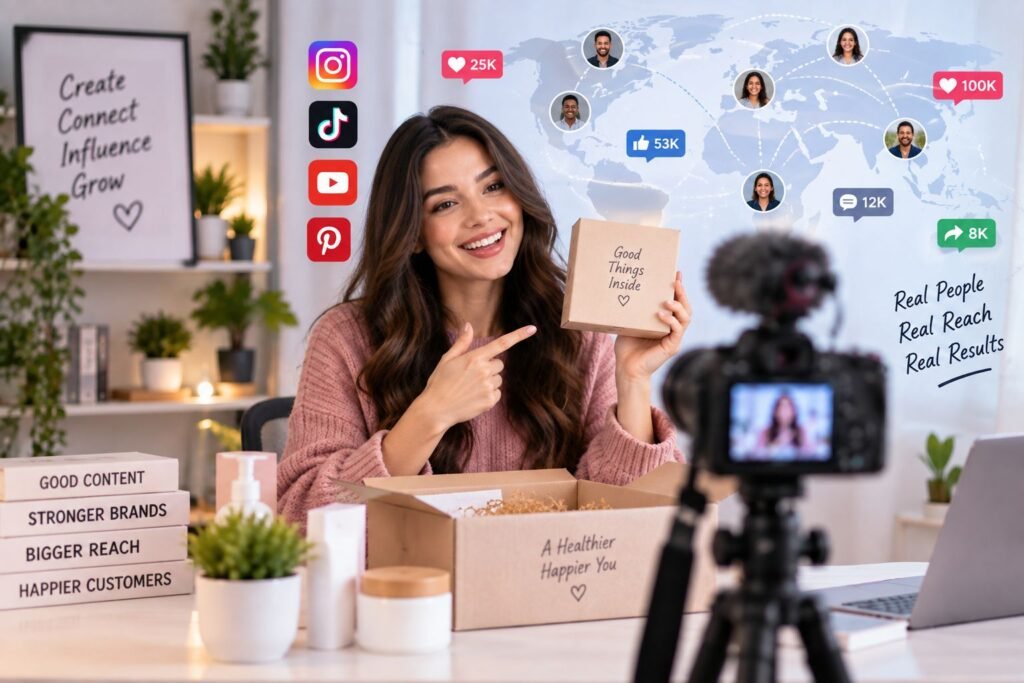
Reach is usually the first thing brands notice when they start working with influencers, and it happens in a few distinct ways.
Access to established audiences. Building an audience from scratch takes years. Partnering with a creator lets a brand instantly appear in front of thousands (or millions) of people who already chose to follow that person.
Reaching niche communities. A protein supplement brand doesn’t need a general audience — it needs people who lift weights, track macros, and care about ingredient lists. Micro and mid-tier influencers in fitness, nutrition, or bodybuilding niches deliver exactly that kind of focused reach, often more efficiently than mass-market advertising.
Expanding brand awareness beyond existing customers. Influencer content frequently reaches people who’ve never heard of the brand before, simply because it shows up in a feed they already check daily.
Reaching new demographics. A brand that has traditionally sold to one age group can use influencers to enter a completely different segment — for instance, a legacy skincare brand partnering with younger beauty creators to reach Gen Z.
Using different platforms strategically. Reach isn’t one-size-fits-all. YouTube creators are useful for long-form product reviews, Instagram creators for lifestyle integration, and TikTok creators for fast, trend-driven visibility. Choosing the right platform for the right audience multiplies the effect.
How Influencer Marketing Increases Engagement
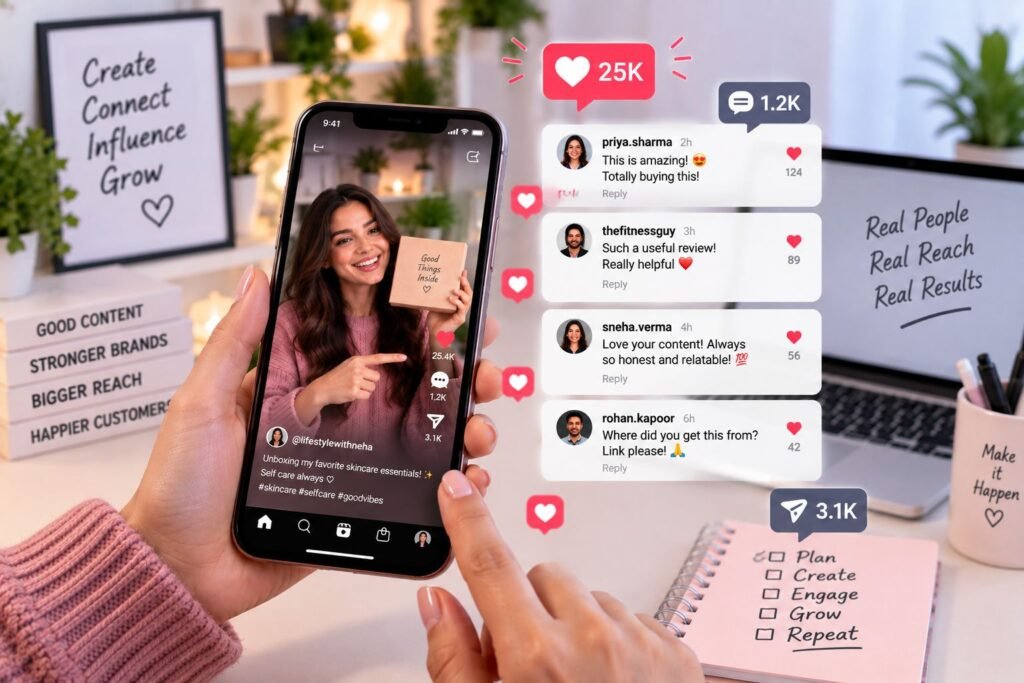
Reach gets a brand seen. Engagement is what makes people actually pay attention — and this is where influencer marketing tends to outperform traditional ads by a wide margin.
Authentic recommendations feel different from ads. When a creator says “I’ve been using this for three weeks and here’s what I noticed,” it reads as a personal experience, not a script. Audiences respond to that difference.
Comments and conversations happen naturally. A sponsored post from a trusted creator often generates real questions in the comments — “Does this work for oily skin?” “Where do you buy this?” — which is a level of interaction a typical banner ad never produces.
Content that feels native to the platform performs better. A creator shooting a product in their normal filming style, using their usual editing and tone, blends into the feed instead of interrupting it. That familiarity keeps people watching instead of scrolling away.
Trust between influencer and follower carries over to the brand. Followers have already decided this person’s opinion is worth listening to. That trust doesn’t disappear when a paid partnership is disclosed — if anything, transparent, well-matched partnerships tend to be respected rather than resented.
Community interaction builds momentum. When multiple people in a creator’s community try a product and post about their own experience, it creates a small ripple of organic content around the original partnership — something a traditional ad can’t replicate.
For instance, a fitness brand launching a new protein powder could partner with a fitness creator who already has an audience interested in workouts and nutrition. One authentic product demonstration can put the product in front of thousands of relevant potential customers — and because the audience is already primed to care about the topic, the engagement rate is naturally higher than a cold ad served to a random audience.
How Influencer Marketing Can Increase Sales
Sales rarely happen on the first impression. Influencer marketing tends to work by moving people gradually through a familiar path: awareness, trust, consideration, and finally purchase.
- Awareness happens the moment the audience sees the creator using or talking about the product.
- Trust builds as the creator explains why they like it, how it works, or what problem it solves for them personally.
- Consideration kicks in when the audience starts imagining the product in their own life — “Would this work for me too?”
- Purchase is the final step, usually nudged along by something that lowers the barrier to buying.
Several tactics speed up that last step:
- Product demonstrations show exactly how something works, which reduces uncertainty for the buyer.
- Reviews and testimonials answer the unspoken question, “Does this actually do what it claims?”
- Discount codes give followers a reason to act now instead of putting the purchase off.
- Affiliate links make it a one-tap process to go from watching a video to landing on the product page.
- Limited-time campaigns create urgency, which is often the nudge that turns interest into an actual order.
- Influencer-created content — unboxings, tutorials, day-in-the-life videos featuring the product — keeps showing up in feeds long after the original post, extending the sales window.
Key Benefits of Influencer Marketing for Brands
Beyond reach, engagement, and sales, a few additional benefits make influencer marketing worth the investment:
- Cost efficiency compared to traditional media, especially when working with micro-influencers instead of celebrities.
- Content that can be reused across a brand’s own social channels, website, and paid ads.
- Faster market feedback, since comments and reactions reveal how real customers feel about a product almost immediately.
- Flexibility across budgets, from small local businesses working with a handful of local creators to global brands running multi-influencer campaigns.
- Stronger brand credibility, built gradually through repeated, genuine associations with trusted voices in a niche.
How to Build an Effective Influencer Marketing Strategy
A strategy that works consistently usually follows these steps:
- Define the campaign goal — brand awareness, engagement, lead generation, or direct sales. The goal shapes every decision after this.
- Identify the target audience — who you’re actually trying to reach, not just who the brand normally talks to.
- Choose the right social platform based on where that audience spends time and consumes content.
- Find relevant influencers whose existing content already aligns with the product or industry.
- Evaluate influencer quality and audience — not just follower count, but who’s actually watching and engaging.
- Set campaign expectations clearly, including deliverables, timelines, and messaging guidelines.
- Create authentic content guidelines that leave room for the creator’s own voice rather than a rigid script.
- Track results and ROI against the goal defined in step one, not against vanity metrics that don’t map to it.
How to Choose the Right Influencer for Your Brand
It’s tempting to pick the influencer with the biggest following, but follower count alone rarely predicts campaign success. A few factors matter more:
- Relevance — does their content naturally overlap with your product category?
- Engagement rate — are people actually commenting, saving, and sharing, or just scrolling past?
- Audience quality — are their followers real, active people who match your target customer?
- Authenticity — do they genuinely use products like yours, or do they promote anything for a fee?
- Content quality — is their production value and storytelling something your brand would be proud to be associated with?
- Brand fit — does their tone, values, and existing audience match what your brand stands for?
A smaller creator with a highly engaged, relevant audience will often outperform a larger one with disengaged followers.
How to Measure Influencer Marketing ROI
Tracking the right numbers makes the difference between guessing and actually improving a strategy over time. Useful metrics include:
- Reach — how many unique people saw the content
- Impressions — total number of times the content was displayed
- Engagement rate — likes, comments, shares, and saves relative to audience size
- Website traffic — visits driven by trackable links
- Leads — sign-ups, downloads, or inquiries generated
- Conversions — actual purchases tied to the campaign
- Sales — total revenue attributed to the partnership
- Cost per acquisition — how much was spent to gain one paying customer
- Return on investment — overall value generated compared to campaign spend
Tracking a mix of these — rather than just follower growth or likes — gives a clearer picture of whether a partnership is actually working.
Common Influencer Marketing Mistakes Brands Should Avoid
Even well-funded campaigns can underperform when a few common mistakes creep in:
- Choosing influencers only because of follower count, without checking engagement or audience fit
- Starting a campaign without a clear goal, making it impossible to judge success afterward
- Poor audience fit, where the creator’s followers simply aren’t potential customers
- Excessive creative restrictions, forcing a script that feels unnatural to the creator’s usual style
- Failing to track results, which means the same mistakes get repeated in the next campaign
Influencer Marketing Trends Brands Should Watch
A few shifts are shaping how brands approach influencer partnerships right now:
- Micro and nano-influencers are increasingly preferred for their higher engagement rates and more affordable partnership costs.
- Long-term brand ambassadorships are replacing one-off posts, since repeated exposure builds more trust than a single sponsored video.
- Short-form video continues to dominate attention, pushing brands to prioritize platforms built around it.
- Performance-based partnerships, where creators earn based on actual sales or clicks, are becoming more common alongside flat-fee deals.
- Authenticity and transparency matter more to audiences than polished production, which is why raw, unscripted content often performs as well as — or better than — highly produced ads.
Frequently Asked Questions
What is influencer marketing? It’s a marketing approach where brands partner with content creators who have engaged social media audiences to promote products or services in an authentic, relatable way.
How does influencer marketing help brands? It expands reach into established audiences, builds trust through authentic recommendations, and moves people through the buying journey from awareness to purchase.
Is influencer marketing effective for small businesses? Yes. Small businesses often see strong results working with micro-influencers, whose smaller but highly engaged audiences can be more cost-effective than large-scale advertising.
How much does influencer marketing cost? Costs vary widely — from product exchanges with small creators to significant fees for larger influencers. Budget should be matched to the campaign goal and expected reach.
How do brands measure influencer marketing success? By tracking metrics tied to the campaign goal, such as reach, engagement rate, website traffic, conversions, and return on investment.
How do I choose the right influencer? Look beyond follower count to relevance, engagement rate, audience quality, authenticity, and how well their content style matches your brand.
Do influencer partnerships need to be disclosed? Yes, sponsored content should be clearly disclosed to the audience, which also tends to build rather than harm trust when the partnership feels genuine.
Conclusion
Influencer marketing works because it replaces impersonal advertising with a recommendation from someone the audience already trusts. Done well, it expands a brand’s reach into new and relevant communities, sparks real engagement instead of passive scrolling, and gradually moves people toward a purchase decision. The brands that get the most out of it aren’t necessarily the ones with the biggest budgets — they’re the ones that choose the right creators, set clear goals, and let the partnership feel genuine rather than scripted.
